
A Complete Gym Budget Guide
If you’ve ever wondered, “how much does it cost to create your own gym?”, the answer can range from a few thousand dollars for a basic home workout space to tens of thousands of dollars for a premium home gym or professional fitness facility.
The biggest factor is not simply the size of the gym. Your total investment depends on the equipment you choose, the amount of space you’re working with, flooring, storage, electrical work, installation, design, and whether you want specialized features such as a sauna or cold plunge.
For that reason, it’s helpful to think about gym costs in categories rather than expecting one universal price.
At Alpine Fitness, we’ve worked with fitness spaces ranging from home gyms to larger training facilities. That experience has shown us that good planning can make a significant difference in how much value you get from every dollar you spend.
What Is the Average Cost to Build a Home Gym?
A basic home gym can often be created for a few thousand dollars, while a fully equipped custom gym can cost significantly more.
A useful way to think about the investment is:
| Home Gym Type | Approximate Investment |
|---|---|
| Basic workout space | $500–$2,500+ |
| Small strength-focused gym | $2,500–$7,500+ |
| Fully equipped home gym | $7,500–$20,000+ |
| Premium custom home gym | $20,000–$50,000+ |
| Luxury home gym with recovery amenities | $50,000+ |
These are broad planning ranges rather than fixed prices. Equipment brands, room construction, installation, customization, and recovery features can cause the final cost to vary substantially.
The good news is that you don’t have to purchase everything at once.
A well-planned gym can start with the equipment you need most and expand as your fitness goals and budget evolve.
How Much Does Gym Equipment Cost?
Equipment is usually the largest part of a home gym budget.
However, you don’t necessarily need dozens of machines to create an effective workout space.
Basic Equipment: $500–$2,500+
A beginner-friendly gym might include:
- Adjustable dumbbells
- Resistance bands
- Kettlebells
- Exercise mat
- Adjustable bench
- Pull-up bar
This setup can support strength training, mobility work, bodyweight exercises, and general fitness without requiring a dedicated room.
Intermediate Equipment: $2,500–$7,500+
A more advanced home gym could add:
- Power rack
- Olympic barbell
- Weight plates
- Heavier dumbbells
- Adjustable bench
- Cable or functional trainer
- Storage racks
This type of setup gives you significantly more options for progressive strength training.
Advanced Equipment: $7,500–$20,000+
A larger investment could include:
- Commercial-grade strength machines
- Multiple cable stations
- Full dumbbell sets
- Specialty barbells
- Multiple benches
- Cardio equipment
- Functional training equipment
- Dedicated storage
At this point, equipment selection and placement become increasingly important because you’re investing in both the equipment and the space required to use it properly.
Do You Need Every Piece of Gym Equipment?
No.
One of the most common mistakes when building a home gym is buying equipment simply because it looks impressive.
Instead, start with your goals.
If you want to build muscle, prioritize equipment that supports progressive resistance training.
If you want to improve athletic performance, prioritize strength, conditioning, mobility, and functional training.
If you primarily want cardiovascular fitness, you may get more value from one or two quality cardio machines rather than filling your room with equipment.
A carefully selected combination of versatile equipment can provide hundreds of possible workouts without requiring a huge room.
How Much Does Home Gym Flooring Cost?
Flooring is another expense that is easy to overlook.
Rubber gym flooring is popular because it can:
- Protect the subfloor
- Reduce impact
- Improve traction
- Reduce noise
- Protect equipment
- Create a more professional workout environment
The cost depends on the material, thickness, installation method, and size of the room.
For example, lighter exercise may only require thinner flooring, while heavy strength training and powerlifting can benefit from thicker, more durable rubber.
Alpine Fitness offers gym flooring options designed for both home and commercial fitness environments, including interlocking rubber tiles and other solutions for different training needs.
How Much Does Gym Design Cost?
Gym design costs vary significantly depending on the project.
A basic home gym may only require simple planning and measurements. A larger project may involve professional gym design, equipment selection, layout planning, flooring, storage, and installation.
The more complex the project becomes, the more valuable professional planning can be.
A gym designer can help you determine:
- How much equipment your room can accommodate
- Where each machine should go
- How much clearance is needed
- Where weight storage should be located
- How people will move through the room
- What flooring is appropriate
- How to plan for future equipment
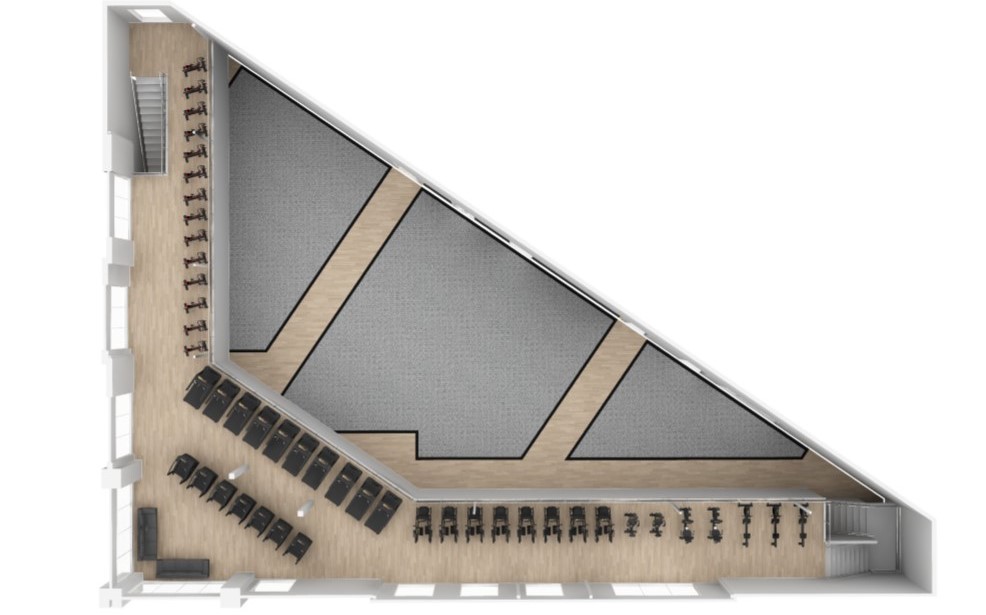
Alpine Fitness provides professional gym design services for home gyms, corporate fitness centers, schools, universities, athletic facilities, and commercial gyms. Their design process includes gym layouts, equipment selection, space optimization, and planning around individual goals and budgets.
Is Professional Gym Design Worth the Cost?
For a small home gym, professional design may not be necessary.
However, it can become much more valuable when you’re investing heavily in equipment or working with limited space.
For example, imagine spending $15,000 on equipment only to discover that:
- The machines don’t fit comfortably
- Your power rack blocks a doorway
- You don’t have enough room to load a barbell
- Your cardio equipment creates a traffic problem
- There isn’t enough storage
- Your flooring isn’t appropriate for heavy lifting
A thoughtful layout can help prevent these problems before you spend money.
In other words, gym design isn’t simply about making a space look good. It’s about making your investment work better.
How Much Does a Garage Gym Cost?
A garage can be an excellent location for a home gym because it often provides more open space than a bedroom or spare room.
A garage gym may require additional expenses such as:
- Rubber flooring
- Lighting
- Electrical outlets
- Heating or cooling
- Ventilation
- Wall storage
- Mirrors
- Insulation
- Garage door considerations
A basic garage gym might cost several thousand dollars, while a fully finished garage gym with commercial equipment and climate control can quickly reach $10,000–$30,000 or more.
The condition of the garage itself can have a major impact on your final budget.
How Much Does a Commercial Gym Cost?
Creating a commercial gym is a completely different investment from building a home gym.
Commercial fitness facilities can require substantial budgets for:
- Leasehold improvements
- Construction
- Professional gym design
- Commercial-grade equipment
- Flooring
- Electrical work
- Plumbing
- HVAC
- Lighting
- Reception areas
- Locker rooms
- Showers
- Recovery amenities
- Installation
The cost can range from tens of thousands of dollars for a smaller specialized training facility to hundreds of thousands or more for a large, fully equipped commercial fitness center.
Because the variables are so significant, commercial gym projects should be budgeted around the facility’s square footage, business model, target members, equipment requirements, and construction needs.
Don’t Forget Storage in Your Gym Budget
Storage is a small part of the overall budget that can have a major effect on how your gym functions.
Consider dedicated storage for:
- Dumbbells
- Weight plates
- Kettlebells
- Resistance bands
- Medicine balls
- Barbells
- Mats
- Foam rollers
- Functional training equipment
Wall-mounted storage can be particularly useful in smaller home gyms because it keeps equipment off the floor.
Good storage also improves safety and makes the gym easier to keep organized.
How Much Does a Home Gym With Cardio Equipment Cost?
Cardio equipment can dramatically increase your budget.
Depending on the equipment and quality, you might add:
- Treadmill
- Exercise bike
- Rowing machine
- Elliptical
- Stair climber
You don’t necessarily need all of them.
For many people, one high-quality cardio machine combined with strength equipment provides considerably more value than several machines that rarely get used.
Before buying cardio equipment, measure both the machine and the space around it. A treadmill, for example, needs adequate clearance for safe use and maintenance.
What About a Home Gym With a Sauna or Cold Plunge?
Premium home gyms increasingly incorporate dedicated recovery spaces.
Possible additions include:
These features can substantially increase the total project cost because they may require specialized equipment, electrical work, plumbing, ventilation, drainage, and additional space.
However, if recovery is an important part of your fitness routine, designing for it from the beginning can be more practical than trying to add these features later.
How to Create a Gym on a Smaller Budget
You don’t need a huge budget to create an effective workout space.
Start with equipment that provides the most exercise options for your money.
For example, a small gym might begin with:
- Adjustable dumbbells
- Adjustable bench
- Resistance bands
- Pull-up bar
- Kettlebell
- Quality flooring
Then gradually add equipment as your needs change.
Another strategy is to purchase commercial-quality equipment selectively rather than buying a large number of inexpensive machines.
The goal isn’t to create the most impressive-looking gym.
The goal is to create a gym you’ll actually use.
Should You Buy New or Used Gym Equipment?
Used gym equipment can reduce the initial cost considerably, particularly for durable items such as:
- Weight plates
- Dumbbells
- Benches
- Power racks
- Certain strength machines
However, inspect used equipment carefully.
Check for:
- Rust
- Damaged cables
- Worn upholstery
- Cracked welds
- Missing parts
- Excessive mechanical wear
For complex machines, purchasing from a reputable supplier may provide greater peace of mind and easier access to replacement parts or service.
The Most Important Part of Your Gym Budget: Planning
When calculating how much it costs to create your own gym, equipment should not be the only number you consider.
A complete budget should account for:
1. Space
Do you already have a suitable room, or will you need construction?
2. Equipment
What equipment actually supports your goals?
3. Flooring
Will your floor withstand your workouts?
4. Layout
Can everything fit safely while maintaining adequate movement space?
5. Storage
Where will weights and accessories go?
6. Utilities
Will you need additional lighting, outlets, HVAC, plumbing, or ventilation?
7. Installation
Will equipment require professional assembly?
8. Future Expansion
Can the space accommodate additional equipment later?
Thinking through these categories before making purchases can prevent expensive mistakes.
Why Equipment Selection and Placement Matter
A gym with expensive equipment can still be poorly designed.
For example, placing a power rack in the wrong location could make it difficult to load weights. A treadmill positioned too close to another machine could create an uncomfortable traffic pattern. Poor storage placement can make free-weight areas feel cluttered.
Professional equipment selection and placement focuses on creating a relationship between the equipment and the space.
At Alpine Fitness, gym design services help clients select strength and cardio equipment based on their goals and available space while creating layouts designed around functionality, safety, and performance.
When Is a Gym Designer Worth Hiring?
You may not need a professional designer for a small workout corner.
However, consider professional gym design if you’re:
- Building a dedicated home gym
- Converting a garage or basement
- Designing a luxury home gym
- Opening a personal training studio
- Building a commercial gym
- Designing a school weight room
- Creating an athletic training facility
- Investing heavily in fitness equipment
The larger the investment, the more important it becomes to plan before purchasing.
Alpine Fitness: From Fitness to Gym Design
Alpine Fitness has a unique perspective because it operates as both a fitness facility and a gym design company.
The company began as an equipment showroom and eventually became a gym design business before opening its own fitness facility. That background provides practical experience with both selecting fitness equipment and creating spaces where people actually train.
Today, Alpine Fitness provides gym design, equipment planning, and fitness expertise for home, commercial, school, university, and athletic facilities. Its design services focus on efficient layouts, equipment selection, functionality, safety, and long-term value.
That combination is useful when you’re trying to answer a question that goes beyond simply “What equipment should I buy?”
The better question is:
“What should I spend my budget on to create the most functional gym for the space I have?”
How Much Does It Cost to Create Your Own Gym?
So, how much does it cost to create your own gym?
A basic home gym can cost less than $2,500, while a well-equipped home gym can easily reach $7,500–$20,000 or more. Premium custom gyms can cost $20,000–$50,000+, particularly when you add commercial-grade equipment, custom construction, flooring, and recovery amenities.
Commercial gyms require an entirely different level of investment and can cost tens or hundreds of thousands of dollars depending on their size and scope.
There is no single “right” gym budget. The smartest approach is to start with your goals, measure your space, determine what equipment you actually need, and then build a budget around those priorities.
Most importantly, don’t spend your entire budget on equipment before thinking about the design. A well-planned layout can help you get more functionality from less space and prevent costly purchases that don’t work for your gym.
Build a Gym Around Your Goals
If you’re planning a home gym, garage gym, commercial fitness facility, or athletic training space, Alpine Fitness can help with custom gym design, equipment selection, placement, and space planning.
Explore Alpine Fitness’s gym design services to learn how professional planning can help you create a functional fitness space that makes the most of your budget, equipment, and available space.
Alpine Fitness serves clients throughout Lehi, American Fork, Pleasant Grove, Highland, Lindon, Alpine, and Cedar Hills, UT. Contact us today!
FAQs
Is it worth it to build your own gym?
For many people, building a home gym can be worth the investment, especially if you plan to work out consistently. A home gym eliminates commuting, provides convenient access to your equipment, and allows you to choose equipment around your specific fitness goals. While the initial cost can be higher than a gym membership, a well-planned home gym can provide value for years.
The key is to avoid spending money on equipment you won’t use. Start with versatile equipment that supports your primary workouts, then expand your gym as your needs change.
Is it cheaper to build a home gym or get a gym membership?
A gym membership is typically less expensive upfront, while a home gym requires a larger initial investment. However, the long-term cost depends on how often you use the facility, how much equipment you purchase, and how long you plan to maintain your membership.
A basic home gym can be created with relatively little equipment, while a fully equipped home gym can cost thousands or tens of thousands of dollars. If you work out frequently and value convenience, investing in a home gym may make sense. On the other hand, a membership can be more economical if you want access to a wide variety of commercial equipment without paying for it individually.
Can I build a home gym in my garage?
Yes. A garage can be an excellent location for a home gym because it often provides open floor space for strength training, cardio equipment, and functional workouts. Before converting your garage, consider flooring, temperature control, ventilation, lighting, electrical outlets, ceiling height, and equipment clearance.
Rubber gym flooring is particularly useful for protecting the concrete and reducing impact from weights. You should also measure your available space before purchasing equipment to make sure everything fits safely.
How much does full gym equipment cost?
The cost of full gym equipment varies significantly based on the size of the gym, equipment quality, and type of training you want to support. A basic home gym may cost around $500–$2,500, while a more complete strength and cardio setup can reach $7,500–$20,000 or more. Premium home gyms with commercial-grade equipment and recovery features can exceed $20,000.
Commercial gyms require a much larger investment because they often need multiple machines, commercial flooring, installation, storage, electrical work, and other facility improvements.
Instead of buying everything at once, prioritize equipment that supports your main fitness goals and provides multiple training options.
How can I start a home gym on a budget?
Start small and prioritize versatile equipment. Adjustable dumbbells, resistance bands, a workout bench, kettlebells, and a quality exercise mat can provide a strong foundation without requiring a large room or major investment.
As your budget grows, you can add a power rack, barbell and plates, cable machine, cardio equipment, or specialized functional training equipment.
You can also save money by purchasing quality used equipment when appropriate and planning your home gym layout before making major purchases. A thoughtful equipment selection and placement strategy can prevent you from spending money on machines that don’t fit your space or training goals.
The best home gym isn’t necessarily the biggest or most expensive. It is the one that fits your space, supports your goals, and makes it easier to stay consistent.
At Alpine Fitness, we combine hands-on fitness experience with gym design, equipment selection, equipment placement, and space planning to help create functional workout environments. Whether you’re converting a garage, designing a dedicated home gym, or planning a larger fitness facility, thoughtful planning can help you get more value from your investment.

0 Comments