
A Complete Guide to Choosing the Right Gym Floor
If you’re building a home gym, upgrading a garage gym, or designing a commercial fitness facility, choosing the right floor is an important part of the process. The right flooring can protect your subfloor, reduce noise, improve traction, absorb impact, and create a more comfortable workout environment.
So, what are the best gym flooring options?
For most strength-focused gyms, rubber gym flooring is one of the most versatile choices. However, the best option depends on how you plan to use your space. A weightlifting area may require thick rubber flooring, while a functional training area may benefit from turf. Meanwhile, a home workout room with lighter exercise may work well with interlocking tiles or thinner rubber flooring.
At Alpine Fitness, we understand that flooring is more than an aesthetic decision. As part of a well-planned gym design, flooring should match the equipment, workout style, room, and long-term needs of the space.
Why Is Gym Flooring Important?
A gym floor has several jobs beyond making a workout space look finished.
Quality gym flooring can help:
- Protect concrete and other subfloors
- Reduce noise and vibration
- Absorb impact from weights
- Improve traction during exercise
- Protect fitness equipment
- Make cleaning easier
- Improve comfort during workouts
- Define different training areas
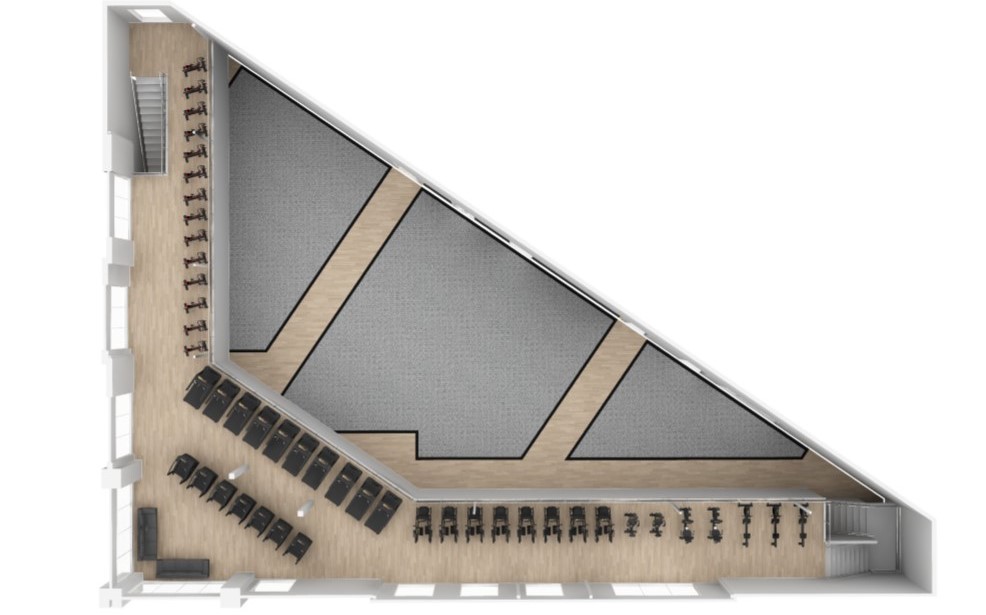
Additionally, the right flooring can help your gym feel more organized. Different materials can separate strength training, cardio, functional training, and recovery areas without requiring walls or permanent dividers.
What Are the Best Gym Flooring Options?
There isn’t one flooring material that works perfectly for every gym. Consider the following options based on your training style and budget.
1. Rubber Gym Flooring
Rubber is one of the most popular choices for home and commercial gyms.
It works particularly well for:
- Weightlifting
- Strength training
- Free weights
- Resistance training
- Functional training
- Commercial fitness facilities
Rubber flooring provides excellent durability and traction while helping absorb impact. Thicker rubber can also provide additional protection when you’re using heavy weights.
For a dedicated strength training area, rubber is often one of the first flooring options worth considering.
2. Rubber Gym Tiles
Interlocking rubber tiles are a practical option for many home gyms and smaller workout spaces.
Because individual tiles can be replaced, they’re useful when you want to install flooring yourself or only need to cover part of a room.
Rubber tiles can work especially well in:
- Garage gyms
- Spare-room gyms
- Basement gyms
- Small training areas
- Home workout spaces
They also make it relatively easy to create a designated workout area without permanently modifying the entire floor.
3. Rolled Rubber Flooring
Rolled rubber flooring is another popular gym flooring solution, particularly for larger spaces.
Instead of installing individual tiles, large rolls cover more of the floor with fewer seams.
This can create a clean, professional appearance while providing durable protection for high-use areas.
Rolled rubber flooring is especially useful for:
- Commercial gyms
- Weight rooms
- Training facilities
- Large home gyms
- Athletic facilities
However, installation can be more involved than interlocking tiles, so professional installation may be worth considering for larger projects.
4. Rubber Mats
Heavy-duty rubber mats can provide a simple solution for smaller areas or specific pieces of equipment.
For example, you might place a thick rubber mat underneath:
- A squat rack
- Weight bench
- Dumbbell area
- Deadlift platform
- Treadmill
This approach can work when you don’t need to cover the entire room with gym flooring.
However, mats may not provide the same seamless appearance or overall protection as installing flooring throughout the entire workout space.
5. Artificial Turf
Turf is an excellent option for functional and athletic training areas.
It can support exercises such as:
- Sled pushes
- Sled pulls
- Sprint drills
- Agility exercises
- Mobility work
- Functional training
A turf strip can also create a dedicated area for athletic training without taking up the entire gym.
For larger facilities, combining turf with rubber flooring can create distinct training zones while keeping the overall design cohesive.
6. Foam Flooring
Foam tiles can be useful for low-impact exercise and activities where comfort is a priority.
They’re often suitable for:
- Yoga
- Stretching
- Mobility work
- Bodyweight exercises
- Children’s fitness areas
However, foam generally isn’t the best choice for heavy strength training or areas where weights may be dropped.
If you’re planning to use barbells, dumbbells, or heavy machines, a more durable flooring material such as rubber is usually a better option.
What Gym Flooring Is Best for Weightlifting?
For heavy strength training and weightlifting, thick rubber flooring is generally one of the strongest options.
Heavy-duty rubber can help protect the subfloor from:
- Dropped weights
- Heavy equipment
- Repeated impact
- Vibrations
- Scratches
The thickness you need depends on how you train. Someone using light dumbbells doesn’t necessarily need the same flooring as someone regularly performing heavy deadlifts.
If Olympic lifting or frequent weight drops are part of your training, a dedicated lifting platform or additional impact protection may also be appropriate.
What Is the Best Flooring for a Garage Gym?
Garage gyms present a few additional considerations.
Concrete is durable, but exercising directly on concrete can be uncomfortable and may expose your equipment and joints to unnecessary impact.
For a garage gym, consider:
- Rubber tiles
- Rubber rolls
- Heavy-duty rubber mats
- Turf for functional training
You should also consider moisture, temperature changes, drainage, and the condition of the concrete before installation.
A properly planned garage gym can combine several flooring materials to create separate areas for lifting, cardio, and functional training.
What Is the Best Flooring for a Home Gym?
The best home gym flooring depends on the room and your workout routine.
For example:
Strength-focused home gym: Heavy-duty rubber
General fitness room: Rubber tiles or mats
Functional training space: Rubber combined with turf
Yoga and mobility room: Foam or cushioned flooring
Cardio area: Rubber or another durable, low-maintenance surface
The key is to select flooring based on what you’ll actually do in the room rather than choosing a material solely because it looks good.
How Thick Should Gym Flooring Be?
Gym flooring thickness should match the type of exercise and equipment being used.
Thinner flooring can be appropriate for:
- Yoga
- Stretching
- Light cardio
- Bodyweight training
Thicker rubber is more appropriate for:
- Dumbbell training
- Heavy strength training
- Powerlifting
- Weightlifting
- Commercial weight rooms
The heavier the equipment and the greater the potential impact, the more important thickness and impact protection become.
How Much Does Gym Flooring Cost?
Gym flooring costs vary based on the material, thickness, room size, installation, and quality.
Generally, basic mats and tiles can be more affordable for smaller spaces, while premium rubber rolls, specialized turf, and professional installation can increase the overall investment.
When calculating your gym budget, don’t only consider the price per square foot.
Also consider:
- Installation
- Subfloor preparation
- Delivery
- Maintenance
- Durability
- Replacement costs
A cheaper floor that needs frequent replacement may ultimately cost more than investing in durable flooring from the beginning.
How to Choose Gym Flooring for Different Training Areas
If your gym includes multiple types of workouts, you don’t necessarily have to use the same flooring everywhere.
A thoughtful gym layout can incorporate different materials for different purposes.
For example:
Strength Training Area
Use durable rubber flooring for racks, benches, and free weights.
Functional Training Area
Use rubber flooring with a turf section for sleds, agility drills, and movement exercises.
Cardio Area
Use durable, easy-to-clean flooring that provides adequate traction.
Stretching and Mobility Area
Use a softer surface designed for floor-based exercises.
This approach creates a more functional gym while making the most of the available space.
Gym Flooring Is Part of Good Gym Design
Flooring should be considered before the equipment is installed—not afterward.
When planning a new gym, think about the relationship between:
- Flooring
- Equipment placement
- Traffic flow
- Storage
- Training zones
- Electrical outlets
- Lighting
- Ventilation
For example, placing a squat rack on a surface designed for heavy lifting makes more sense than putting it on flooring intended primarily for yoga.
This is why flooring selection is an important part of professional gym design.
Common Gym Flooring Mistakes to Avoid
Choosing the wrong flooring can create problems later.
Avoid these common mistakes:
Choosing Flooring Based Only on Appearance
A floor may look great but fail to provide adequate protection for your equipment and workouts.
Using Thin Flooring for Heavy Lifting
Heavy weights require more impact protection than light exercise.
Forgetting the Subfloor
Moisture, cracks, uneven surfaces, and other issues should be addressed before installation.
Covering Everything With One Material
Different training areas may benefit from different flooring solutions.
Buying Before Planning the Layout
Your flooring, equipment placement, and gym layout should work together.
How Alpine Fitness Can Help With Gym Flooring
At Alpine Fitness, we approach flooring as part of the bigger picture.
Our gym design services can help you plan a fitness space around your equipment, training goals, available square footage, and budget. Flooring can then be selected to support the way each area will actually be used.
This can be particularly valuable when you’re designing:
- Home gyms
- Garage gyms
- Commercial gyms
- Athletic training facilities
- Corporate fitness centers
- School weight rooms
Rather than treating flooring as an afterthought, integrating it into the design process can create a safer and more functional workout environment.
Gym Flooring Services in Utah
Alpine Fitness serves clients throughout Lehi, American Fork, Pleasant Grove, Highland, Lindon, Alpine, and Cedar Hills, UT.
Whether you’re building a home gym, upgrading an existing workout room, or designing a larger training facility, selecting the right flooring can help protect your investment and improve the overall training experience.
What Are the Best Gym Flooring Options?
So, what are the best gym flooring options?
For most strength-focused gyms, rubber flooring is a versatile and durable choice. Rubber tiles can work particularly well in smaller home and garage gyms, while rolled rubber can provide a professional solution for larger facilities. Turf is useful for functional and athletic training, while foam flooring can be appropriate for lower-impact activities.
Ultimately, the best gym flooring depends on your equipment, workout style, available space, and budget.
A well-designed fitness space considers flooring alongside equipment selection, equipment placement, storage, traffic flow, and training zones. By planning these elements together, you can create a gym that is safer, more comfortable, and better suited to your long-term goals.
Create a Better Workout Space With Alpine Fitness
If you’re planning a home gym, garage gym, or commercial fitness facility, Alpine Fitness can help you make informed decisions about gym flooring, equipment placement, space planning, and overall gym design.
A thoughtful design can help you maximize your space, protect your equipment, and create a workout environment you’ll want to use consistently. Contact us today!
FAQs
What type of flooring is best for a gym?
The best gym flooring depends on how you use the space. For most strength training areas, rubber gym flooring is one of the most versatile options because it provides durability, traction, impact protection, and noise reduction. Rubber tiles and rolls work well for home gyms, garage gyms, weight rooms, and commercial fitness facilities.
For functional or athletic training, you can also combine rubber with gym turf for sled pushes, agility drills, and other high-intensity movements. For yoga, stretching, and low-impact workouts, softer flooring may be more appropriate.
What is the most durable type of gym flooring?
Heavy-duty rubber flooring is generally one of the most durable gym flooring options, particularly for weightlifting and strength training. It can withstand heavy equipment, repeated use, and significant impact while helping protect the underlying floor.
For areas where weights are frequently dropped, thicker rubber flooring or a dedicated lifting platform can provide additional protection. Commercial-grade rubber is also a strong choice for high-traffic fitness facilities where flooring needs to withstand daily workouts.
How thick should gym flooring be?
The right gym flooring thickness depends on the type of exercise and equipment in the space. Thin rubber flooring or mats can work for general fitness, cardio, and light strength training. Heavier rubber flooring is better suited to powerlifting, Olympic lifting, and areas where heavy weights may be dropped.
As a general guideline, 8–12 mm rubber flooring can work well for many general-purpose gyms, while 15–20+ mm flooring may be more appropriate for heavier strength training and weightlifting areas. The subfloor, equipment, type of lifting, and amount of impact should all be considered before choosing a thickness.
How much does gym flooring usually cost?
Gym flooring costs vary based on the material, thickness, square footage, quality, and installation requirements. Basic rubber mats and interlocking tiles can be relatively affordable for a small home gym, while premium rolled rubber, thick weight-room flooring, specialty turf, and professional installation can increase the overall project cost.
When creating a gym budget, consider more than the material price. Subfloor preparation, delivery, installation, and long-term durability can all affect the total cost. Investing in appropriate flooring from the beginning can also help prevent damage to your equipment and underlying floor.
Is EVA foam or rubber better for a gym floor?
For most strength-focused gyms, rubber flooring is a better choice than EVA foam because it is more durable and better suited to heavy equipment, free weights, and high-impact training.
EVA foam can still be useful for low-impact activities such as yoga, stretching, mobility exercises, and children’s fitness areas because it provides cushioning and comfort. However, it can compress or become damaged under heavy equipment and isn’t generally the first choice for weightlifting.
If your gym combines different types of training, you don’t necessarily have to choose one material for the entire room. A gym design can incorporate rubber flooring in strength areas and softer or specialized surfaces where they make more sense.
Choosing the Right Gym Flooring
The right flooring should support the equipment and activities in each part of your gym. Considering gym flooring, equipment placement, training zones, storage, and overall gym layout together can help you create a more functional and durable fitness space.
At Alpine Fitness, we can help incorporate flooring and equipment considerations into a complete gym design for home gyms, commercial fitness facilities, and athletic training spaces.

0 Comments